

“0% Interest” Doesn’t Always Mean “No Extra Cost”
Two things tend to hold hesitant buyers back when a laptop is sitting in their cart: whether they can afford it, and whether they trust a payment method they only half understand. The second worry is fair. “Interest-free” and “cost-free” sound like the same thing, but they are not.
A 0% interest plan means the provider doesn’t charge interest on the amount you borrow, as long as you stay on the plan’s terms. It doesn’t mean nothing can ever be added to what you pay. This guide explains how the mechanism works, where extra costs can still appear, what protections exist in Singapore, and how to judge whether instalments suit you. It isn’t trying to talk you into buying.
What Buy Now, Pay Later Actually Is
Buy now, pay later (BNPL) lets you take the product now and pay for it in scheduled instalments. If you’ve only seen a provider’s logo at checkout, the next two sections explain what sits behind it.
How the Money Flows Between You, the Provider and the Retailer
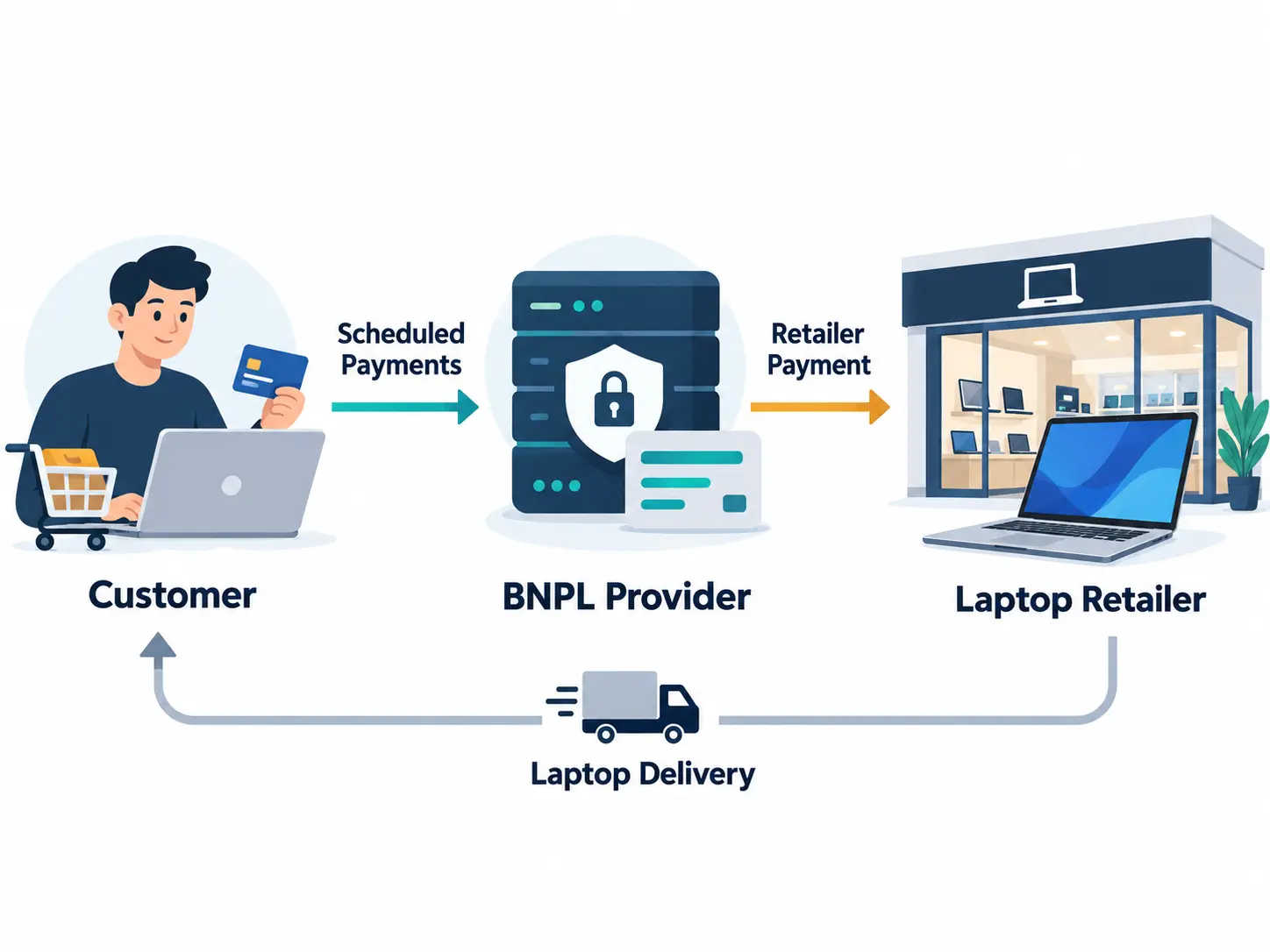
In a typical BNPL arrangement, the provider pays the retailer for your purchase, usually minus a fee the retailer bears. You then repay the provider in instalments. You repay the provider, not the shop.
This has a practical consequence. If you miss a payment, you deal with the provider. If you want to return the product, you deal with the retailer’s returns policy, and then the two need to be reconciled. Keeping these roles straight makes the later sections easier to follow.
BNPL vs Credit Card Instalments vs Personal Loans
All three spread the cost of a purchase, but they work differently. The comparison below is general, and the details vary by provider, bank and plan, so confirm current terms before relying on any row.
| Factor | BNPL | Credit card instalment plan | Personal loan |
| Interest and fees | Short plans are typically interest-free if paid on time; late fees apply; longer plans may carry a processing fee | Set by your bank; some plans are interest-free but may include a fee | Interest is charged; fees may apply |
| Approval | Provider’s own check, usually through an app; limits vary by user | Needs an existing card; uses your card’s credit limit | Formal application and credit assessment |
| Who sets the terms | The provider, within an industry code | Your bank | The lender |
| Wider credit picture | Repayment information is shared among accredited BNPL providers | Ask your bank how it is recorded | Ask your lender how it is recorded |
No option here is automatically the right one. The best fit depends on how much you’re spending, how quickly you can repay, and which terms you’ve actually read.
How a 3-Month Instalment Plan Works When Buying a Laptop
From Checkout to Final Payment
The sequence is broadly similar across providers. You choose the BNPL option at checkout. If it’s your first time, you create a provider account and go through an approval check. You pay the first instalment at the point of purchase, and the remaining instalments follow on a schedule, usually about a month apart. Payments are often collected automatically from the card linked to your account, with reminders sent beforehand.
For a three-month plan, that commonly means one-third now and two-thirds spread over the next two months. Treat this as a typical flow rather than a promise: the provider’s current terms and your own payment schedule in its app are what count. You can see how a laptop is listed before you start by browsing the laptop range.
When You Receive the Laptop
A common question is whether the laptop ships only after every instalment is paid. Because the provider typically pays the retailer upfront, the order is generally treated as paid, and the instalment schedule is a separate matter between you and the provider. Fulfilment timing is still the retailer’s decision, so check the retailer’s stated process rather than assuming.
For reference, ABEX lists Atome among its checkout payment options.
Eligibility, Approval and Spending Limits
Approval isn’t guaranteed, and a purchase can be declined. Providers usually require you to be at least 18, to hold a Singapore-issued credit or debit card, and to have a valid phone number. Spending limits differ from user to user and can change over time.
Under the industry code described below, accredited providers shouldn’t let you build up more than S$2,000 in outstanding payments unless they carry out an additional credit assessment. If a laptop’s price would push you past your available limit, the option may not appear at checkout. Criteria and limits change, so confirm them with the provider.
Where Costs Can Still Appear
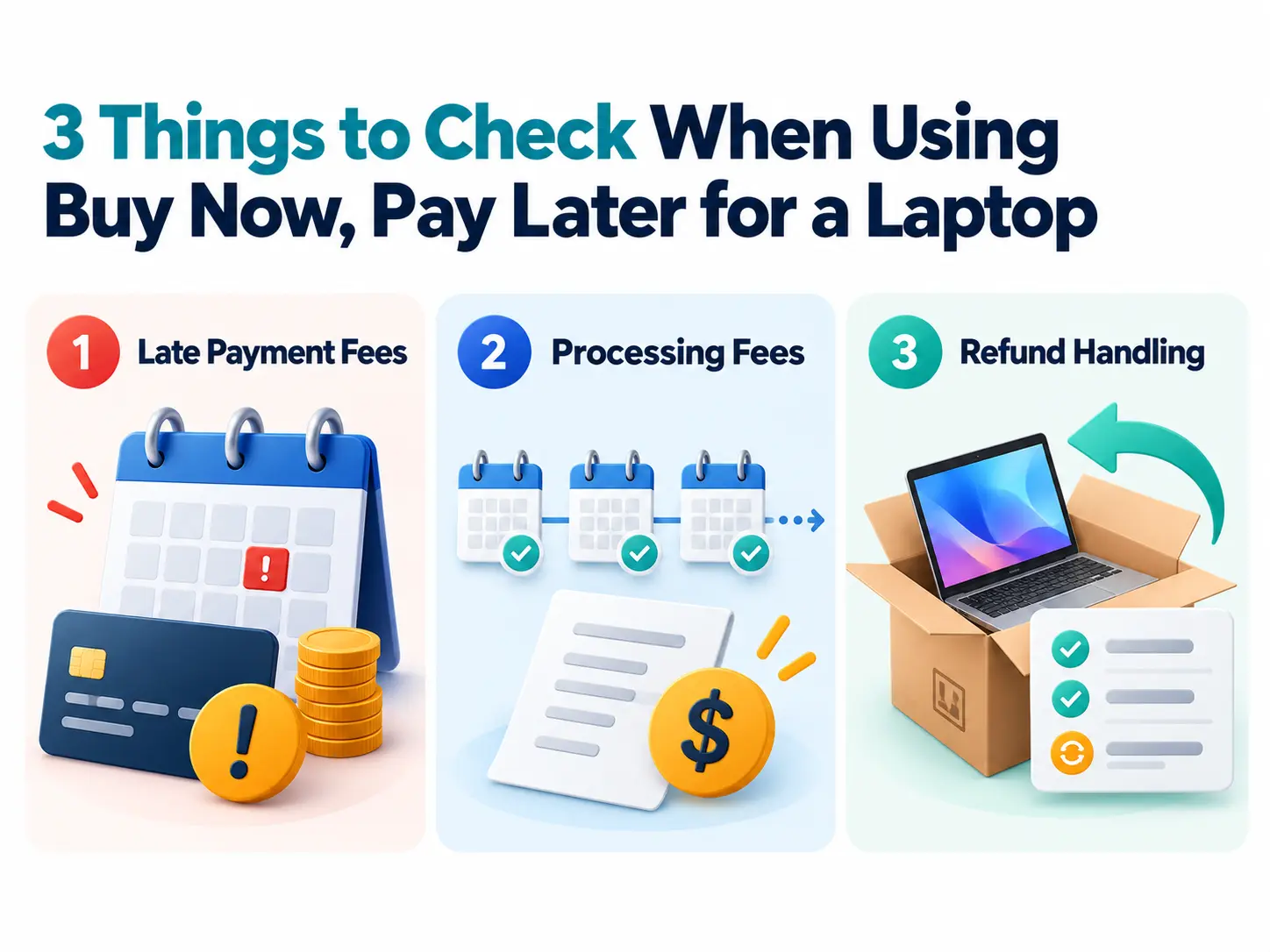
Late Payment Fees
The plan is interest-free only if every payment is made on time. Atome’s help centre explains that if an automatic deduction fails on the due date, the account is suspended and an administration fee applies for the overdue payment. You then need to pay all outstanding amounts, including the fee, before the account is restored.
Fee amounts vary by provider and have changed over time, so check the current figure on the provider’s site rather than relying on older articles. The main point is structural: one missed date can add a fee and block further purchases until it’s settled.
Longer Plans and Processing Fees
“0% interest” applies to a specific plan, not to everything a provider offers. Some providers offer extended plans, such as six months or longer, at certain retailers, and those may carry a processing fee. Availability and fees vary by retailer and by user. Before choosing a plan, check whether the fee appears at checkout and whether the plan you’re selecting is interest-free.
What Happens If You Return the Laptop or It’s Faulty
Returns, refunds and warranty claims run through the retailer, while repayments run through the provider. In general, if a refund is approved, the provider adjusts your instalments, but how the provider and retailer handle full and partial refunds depends on their policies. Confirm both before committing, particularly if a refund is approved after you’ve already paid one or two instalments.
For coverage questions about faults, see the warranty explainer. A warranty claim and an instalment plan are separate processes, so don’t assume a claim will pause your repayments. Ask the provider what happens to the schedule while a claim is being resolved.
What Singapore’s BNPL Framework Does and Doesn’t Cover
The Industry Code of Conduct
The Monetary Authority of Singapore has said it does not currently regulate BNPL firms. Instead, firms operating here have committed to a BNPL Code of Conduct, and MAS has confirmed they can’t grant a limit above S$2,000 without additional credit assessments. The code was developed by the Singapore FinTech Association and industry players under MAS guidance.
It also commits providers to capping fees, including late fees, to clear and non-misleading advertising, and to giving customers statements of their outstanding balance. Providers go through an accreditation process to show they comply.
The limits matter, though. This is industry self-regulation. It isn’t the same as the regulation that applies to banks or credit cards, and MAS has said it will keep monitoring the sector and review its approach as appropriate, so the framework may change.
Credit Records and Data Sharing
Does BNPL affect your credit standing? The answer is partly yes and partly “check”. Under the code, providers share users’ outstanding balances, missed payments, and delinquencies with an independent service provider, and other compliant BNPL providers can use that information for credit risk assessment.
In practice, missed payments with one provider could affect how others assess you. Whether a provider also reports to the wider credit bureau system, and what that would mean for you, varies, so ask the provider directly rather than assuming either way.
Is Paying in Instalments the Right Way to Buy a Laptop?
When Instalments Can Make Sense
Instalments can be reasonable when you need a laptop now and would rather not draw down your savings, or when your income is predictable, and each payment fits comfortably within your monthly budget. They can also smooth cash flow for someone paid at the end of the month but with an earlier deadline. The condition that matters is simple: you can meet every payment on time.
When to Pause and Consider Alternatives
Pause if your income is uncertain, if you already have other BNPL or credit commitments, or if you’re considering a laptop above your budget mainly because the instalments look smaller. Smaller-looking payments don’t reduce the total you owe. It may be worth looking at a lower-specification or refurbished model, or saving first.
Here is a short illustrative example, not a real case. Imagine a laptop priced at S1,500thatyouexpecttouseforaboutfouryears.Onathree-monthplan,that’sroughlyS500 a month for three months. The repayment ends long before the laptop’s useful life does, which is a point in its favour, but the monthly amounts are large for a short period. A plan that feels light at checkout can still crowd out rent or bills if your month is already tight.
A Pre-Checkout Checklist
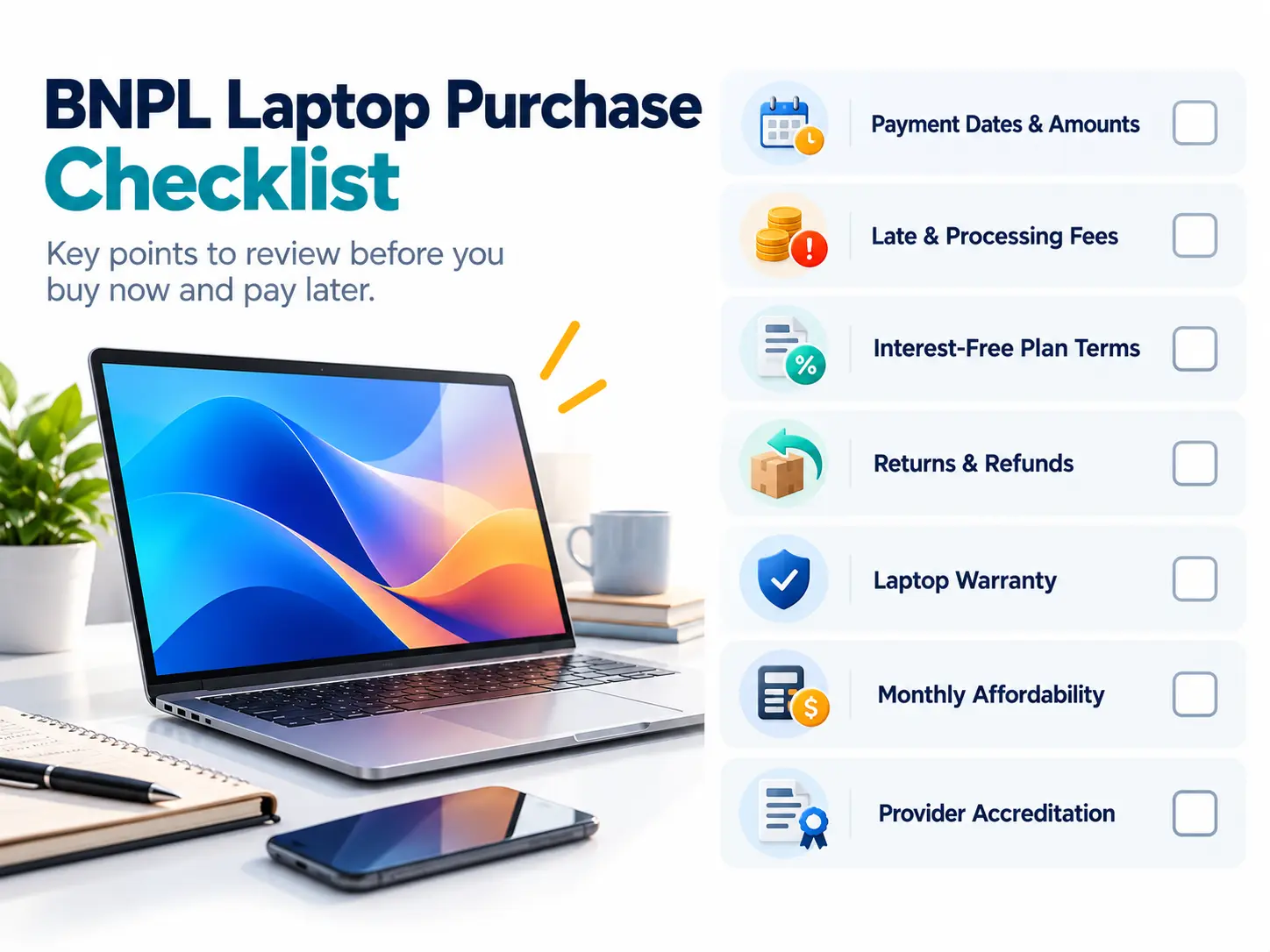
Before confirming, verify the following:
- The exact amount and date of each instalment, and which card will be charged
- The provider’s current late fee and any processing fee on your plan
- Whether the plan you’ve selected is the interest-free one
- The retailer’s return and refund policy, and how the provider handles refunds on instalment orders
- The laptop’s warranty coverage and what it includes
- Whether your total commitment, including any other BNPL or credit repayments, fits your monthly budget
- Whether the provider is accredited under the BNPL Code of Conduct
Conclusion
A 0% interest instalment plan is a payment mechanism, not a discount. The provider pays the retailer, you repay the provider on a schedule, and the plan stays interest-free only while you keep to it. Late fees, longer-plan processing fees and refund handling are where costs and confusion most often appear, so they’re worth reading before you commit.
In Singapore, protections come mainly from an industry code that sets limits, fee caps and data-sharing rules, rather than from licensing, and it may evolve. Weigh your income, your existing commitments, and the total, and the decision becomes much clearer.